
“BARABAN”
BILLIARDS RULES
1. Billiards Equipment
To play Baraban billiards, standard billiard tables, cues, and accessories for Pyramid billiards are used.
2. Balls for “Baraban”
Two sets of special Strila billiard balls Aramith Premier with a diameter of 67 mm are used for Baraban billiards (two balls of each color: red, yellow, green, brown, blue, pink, black, and white).
3. Color Groups of Balls
3.1 Sixteen billiard balls are used in the game. They are divided into two color groups (Lower and Upper).
3.2 The Lower Color Group (two red, two yellow, two green, and two brown balls) is shown in Fig. 1.
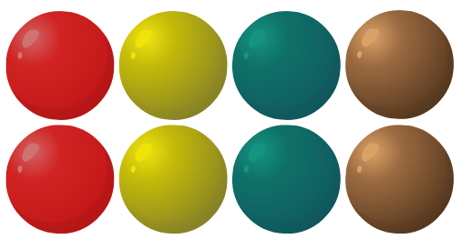
Figure 1 – Lower Color Group
3.3 The Upper Color Group (two blue, two pink, two black, and two white balls) is shown in Fig. 2.
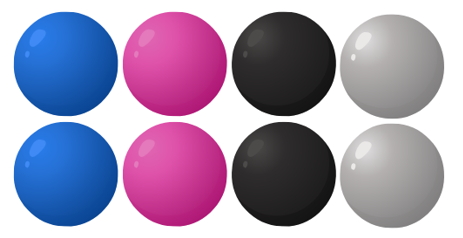
Figure 2 – Upper Color Group
4. Start of a Frame
4.1 At the start of the frame, fifteen colored balls are placed on the foot spot in a specified order (Fig. 3, Fig. 4).
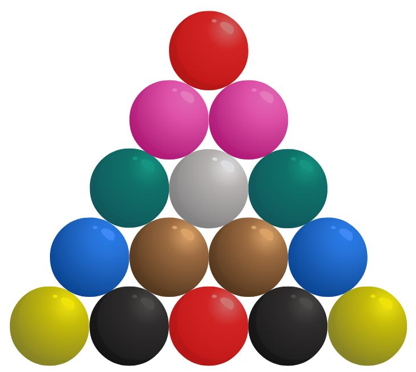
Figure 3 – Order of the initial ball placement
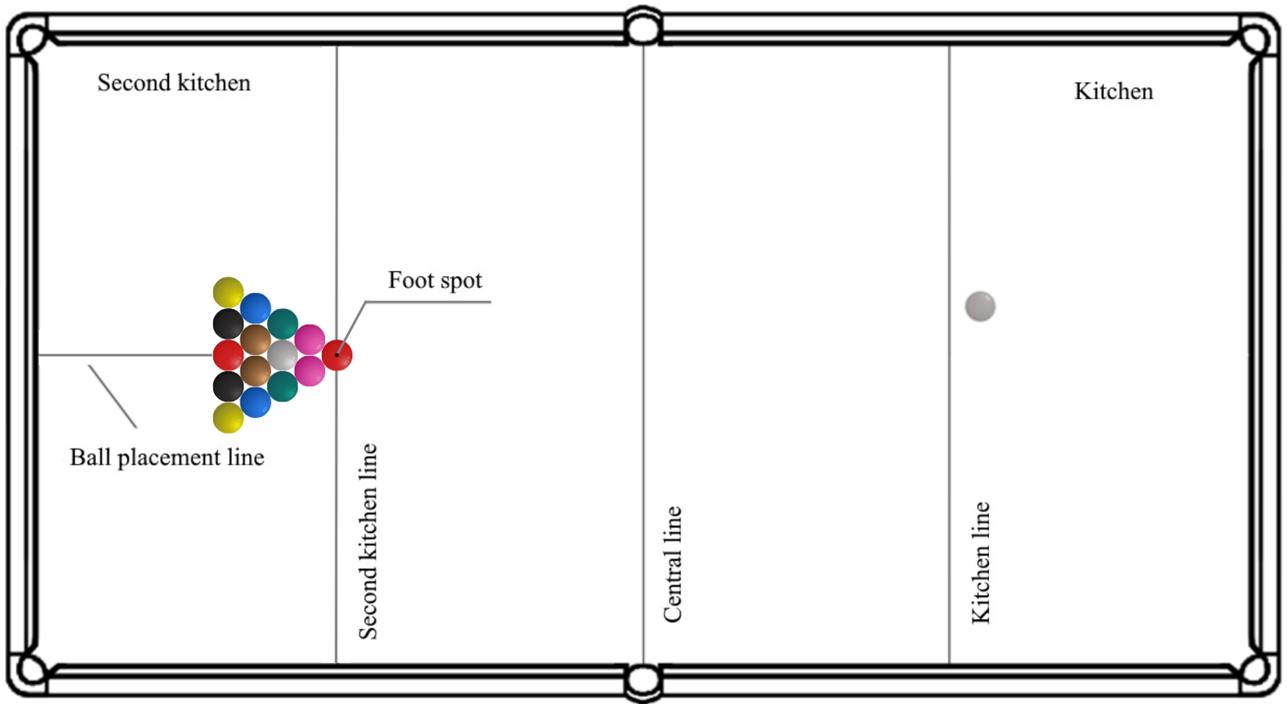
Figure 4 – Initial placement of balls on the table
4.2 The player who won the draw for the first shot performs the opening shot (break) from the baulk area (“home”), striking the cue ball into any ball of the initial ball placement.
4.3 The break shot must be active (if no ball is pocketed, at least three colored balls must contact a cushion, or two colored balls must contact a cushion and another colored ball must roll across the center line of the playing table). If this does not occur, a foul is declared (Clause 12).
4.4 If the player does not pocket a ball on the break, an “Open Table” is declared (Clause 6), and the right to take the next shot passes to the opponent.
4.5 If the player pockets a ball (balls) on the break, they continue their turn (run) and may declare either “Color Group Selection” (only the group of the ball they pocketed)* (Clause 7) or “Open Table” (Clause 6).
* If the player pockets a white ball on the break, they may declare the selection of the Upper Color Group (since the white ball belongs to the Upper Color Group – Clause 3).
5. Conduct of the Game
5.1After the break, the game is divided into three stages: “Open Table” (Clause 6), “Color Group Selection” (Clause 7), and “Play on the Last Ball” (Clause 8).
5.2 Depending on the stage of the game, players must play with designated balls. The balls a player is required to play with are called active balls. The opponent’s balls are called inactive balls; the player is prohibited from playing them or from striking them with the first contact of the cue ball. The cue ball may be any ball from the player’s active balls.
|
Stage |
Active Balls |
|
Open Table |
Any balls on the table |
|
Color Group Selection |
Any balls from the player’s color group |
|
Play on the Last Ball |
The last ball from the player’s color group and the balls of two opponent’s lowest-ranked remaining colors |
5.3 Playing active balls, it is permitted to pocket both the cue ball and object balls.
5.4 After pocketing an active ball, the player continues their run (even if an inactive ball was also pocketed with the same shot).
5.5 If only an inactive ball is pocketed, the ball is counted and the opponent continues the game.
5.6 After a miss or a foul, the right to take the shot passes to the opponent.
5.7 The objective of the game is to pocket all balls of one’s own color group before the opponent does.
6. “Open Table” Stage continues until one of the players pockets a ball during or after the opening break shot.
6.1 During the “Open Table” stage, for both players, any balls on the table are active balls. That is, any ball on the table may be used as the cue ball, and any ball on the table may be object ball. It is permitted to pocket both the cue ball and any object ball.
6.2 If a foul occurs during the “Open Table” stage, the player must act in accordance with Clause 12; in this case, “Color Group Selection” does not occur.
7. “Color Group Selection” Stage begins after one of the players pockets a ball for the first time in the frame. After that, all balls of the color group (Clause 3) of the pocketed ball become the player’s active balls. All balls of the other color group become inactive balls (the opponent’s balls).
* If, during “Color Group Selection”, a player pockets balls from both color groups with one shot, the player may choose which color group to continue the frame with.
7.1 After “Color Group Selection”, players must play with their active balls and pocket them in any order until only one ball of their color group remains on the table.
7.2 If a player performs a shot using an inactive ball (the opponent’s ball), or if the first contact of the cue ball is with an inactive ball, a foul is declared.
7.3 A player is prohibited from rolling their active ball into a pocket without contacting another active ball (a “blank” shot) or by contacting an inactive ball. It is also prohibited to pocket or hit an inactive ball (the opponent’s ball) directly without first touching the cue ball to the active ball. In such a cases, the positions of all balls are restored and a foul is declared. Repeated execution of such a shots is regarded as unsportsmanlike conduct and results in loss of the frame.
7.4 If, with one legal shot, a player pockets both an active ball and an inactive ball (the opponent’s ball), all balls are counted and the player continues their run.
7.5 If, with a legal shot, a player pockets only an inactive ball (the opponent’s ball), the ball is counted and the right to take the next shot passes to the opponent.
7.6 If, with one legal shot, a player pockets all remaining balls of their color group on the table, the player wins the frame.
8. The “Play on the Last Ball” Stage begins when only the last ball of the player’s color group remains on the table. In this case, the player’s active balls become this ball and the balls of two opponent’s lowest-ranked remaining colors (Clause 3).
8.1 The ranking of the Lower Color Group in ascending order is: red, yellow, green, brown balls (Fig. 1).
8.2 The ranking of the Upper Color Group in ascending order is: blue, pink, black, white balls (Fig. 2).
8.3 By pocketing the last ball of their color group with a legal shot, the player wins the frame.
8.4 If, with one legal shot, the player pockets their last ball and a ball of the opponent’s color group (even if it was the opponent’s last ball), the player wins the frame.
8.5 If the player pockets the ball of two opponent’s lowest-ranked colors (his active ball), this ball is counted and the player continues their run, provided that this ball was not the last ball of the opponent’s color group.
8.6 If the player pockets the last ball of the opponent’s color group, the player loses the frame.
8.7 If the player pockets only an inactive ball (not the opponent’s lowest-ranked ball), the ball is counted and the right to take the next shot passes to the opponent.
9. Legal Shot (Properly Completed Shot)
A properly completed shot is governed in the same manner as in Pyramid billiards rules: after the cue ball contacts an active ball, either a ball must be pocketed or a safety play must occur (“two cushions”, “cushion – center-line roll”, or “center-line roll – cushion”). If this condition is not met, a foul is declared.
10. Mask (Snooker)
A mask (snooker) situation occurs if the straight-line path of any active ball of the player, when executing a direct shot at any other active ball, is completely blocked by the opponent’s ball or balls.
11. Escape from a Mask (Snooker)
11.1 The player taking the shot must agree with the opponent and the referee that the shot will be played from a mask (snooker).
11.2 Only in a mask (snooker) situation! For a legal shot, after the cue ball strikes an active ball, at least one ball on the table must contact a cushion or cross the center line of the table. If this condition is not met, a foul is declared.
* If the first contact of the cue ball is with an active ball positioned directly against a cushion, the shot is considered legal.
11.3 When escaping a mask (snooker), the player must attempt to make the first contact of the cue ball with an active ball. If the player performs a shot that is not aimed at contacting an active ball, or deliberately plays a shot at an inactive ball, the positions of all balls are restored and a foul is declared. A powerful direct shot at an inactive ball is considered unsportsmanlike conduct and results in the loss of the frame.
11.4 To escape a mask (snooker), the player may use cushion shots (one or multiple cushions) or perform curved shots (massé).
11.5 Jump shots for escaping a mask (snooker) are prohibited — foul.
12. Foul
All incorrectly pocketed active balls of player and balls that have left the table are placed on the foot spot.
After the “Color Group Selection” (i.e., in stages 1.7 and 1.8), if a foul results in the fouling player’s active ball(s) coming to rest in a pocket area* (corner or middle), those balls are spotted on the foot spot**.
*pocket area – the distance of two ball diameters from the point where the ball landed in the pocket.
In the event of an opponent’s foul, the player gains the right to remove any ball from the table (their own or the opponent’s) and chooses who will take the next shot (the player or the opponent).
Author of “Baraban” Billiards
Viktor Baraban